
Dog heat cycle calculator
Enter the first day of her last season and roughly how often she cycles, and you get a three-date window to plan around. It will not give you a breeding day. Nothing that works from a calendar can.
If you're guessing, six months is the safest guess for most breeds.
Pick the first day of her last season and the three dates appear here.
General educational information and estimates only—not veterinary advice or a diagnosis. No veterinarian-client-patient relationship is created. Confirm care with a licensed veterinarian; for urgent concerns, contact a veterinarian or emergency clinic now.
Before her next season
Affiliate disclosure: Breeder Lab may earn a commission from EZwhelp purchases made through these links, at no extra cost to you.
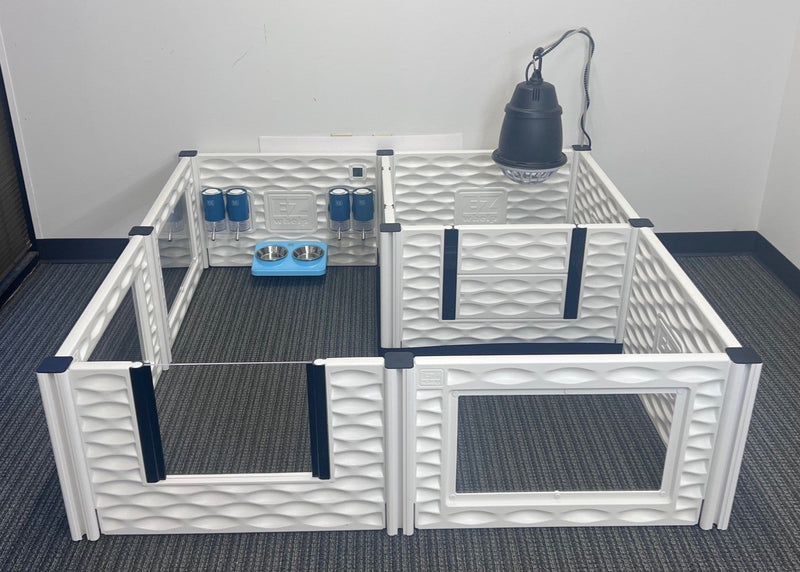

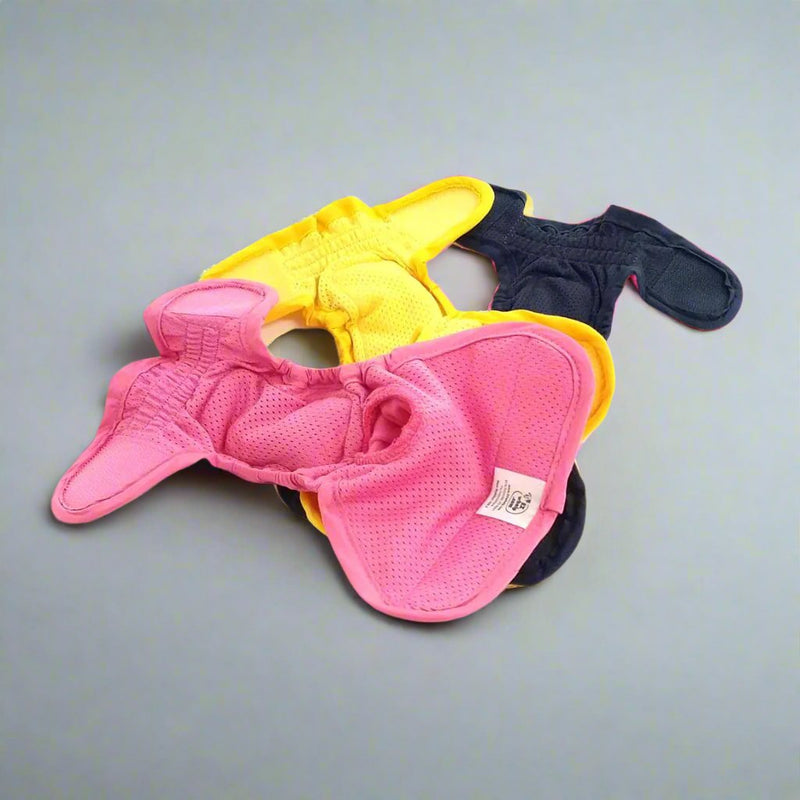
Not sure which size or bundle?
Five questions. We fill in what you've already told us.
Learn
Dog heat cycle calculator
Enter the first day of her last season and roughly how often she cycles, and you get a three-date window to plan around.
It will not give you a breeding day. Nothing that works from a calendar can. What it gives you is a period to watch her in, and enough notice to book the progesterone testing that does find the fertile window.
How often do dogs come into season?
The typical interval between seasons, the four stages of a cycle, and why a calendar can't tell you the breeding day.
How to read the result
You get three dates:
- Earliest — a month before the expected date. Start watching here.
- Expected — her interval added to her last season.
- Latest — a month after. Most seasons will have arrived by now.
The window is a month either side because that is roughly how much a normal bitch moves between cycles. If she has been consistent for years, she will likely land near the middle. If she is young, expect her to wander.
The interval you pick matters more than anything else on this page. If you know her own average from past seasons, use that. If you are guessing, six months is the safest guess for most breeds.
How often do dogs come into season?
Most bitches cycle twice a year. The interval between seasons normally runs 4 to 13 months, averaging about 7 according to the MSD Veterinary Manual. Cornell puts the typical pattern at every 5 to 11 months.
That is a wide range, and it is the honest answer. A bitch is usually consistent with herself once she matures — so her own record beats any published figure. After two or three seasons you will know her better than any average does.
Some breeds sit outside the range entirely. Basenjis and Tibetan Mastiffs typically cycle once a year. If you have one, a long gap is expected rather than a problem.
The four stages of a season
| Stage | Typical length | What you see |
|---|---|---|
| Prestrus | 2–22 days, averaging 9 | Bleeding, swollen vulva. Males are interested; she is not. |
| Estrus | 3–21 days, averaging 9 | Discharge lightens, swelling softens. She will stand. |
| Diestrus | around 60 days | Signs fade. This phase runs the same length whether or not she is pregnant. |
| Anestrus | 4–5 months | Nothing visible. The long rest between seasons. |
Prestrus and estrus together should not exceed 21 days to be considered normal. What most people call “the season” is those two phases — roughly two to three weeks of visible signs.
Ranges from MSD Veterinary Manual and dvm360.
Why this can’t tell you when to breed
It gives you a window to watch her in. It cannot give you a breeding day, and neither can any calendar.
The fertile window is anchored to ovulation, not to the day bleeding started, and the gap between those two varies enormously. A normal bitch may stand for the male as early as eleven days before ovulation, or as late as eight days after — a nineteen-day spread on behavior alone.
Progesterone testing with your vet is the only reliable way to find ovulation. Testing usually starts around day 5 to 7 of the season. This tool tells you roughly when to book that, not when to breed.
Receptivity range from dvm360.
When a season isn’t normal
Four things worth a vet’s opinion rather than waiting:
- A season running past three weeks. Prestrus and estrus together should not exceed 21 days.
- A return to season within about two months. Very short intervals are worth investigating.
- After a season: off her food, drinking more, low in herself, or a discharge that looks or smells wrong. This combination is the one to act on today rather than tomorrow.
- No first season by 24 months. Worth ruling out an underlying cause.
Sources
- MSD Veterinary Manual — estrous cycle intervals and stage durations.
- Cornell University College of Veterinary Medicine — typical cycle pattern.
- dvm360 — receptivity range relative to ovulation, and stage durations.
- Purina Pro Club — interval and conception figures.
Verified 10 August 2026.
Interval and conception figures from Purina Pro Club. Duration from dvm360.
For planning and record-keeping. Not a substitute for veterinary advice.
Frequently asked
As accurate as the interval you enter. From a published average, expect to be within a month or so. From her own record across three seasons, expect two to three weeks.
A season arriving a month either side of expected is normal. Past thirteen months with no season — or past 24 months with no first season — is worth a vet check.
A spayed bitch does not cycle. If a spayed dog shows signs of a season, see your vet — it can indicate remaining ovarian tissue.
You can, but treat it as rough. First cycles are the least reliable data a bitch produces.
Because a date would be wrong more often than right. Even a consistent bitch moves by a couple of weeks between cycles.
Day one is the first day you see blood. Not the first day her vulva looked swollen, and not the day the males started paying attention — both usually come earlier and neither is a reliable anchor. If you missed the start, count from the first day you were certain and treat the answer as rougher.
A gradual shift as she matures is normal. A sudden change, or a return to season within about two months of the last one, is worth a vet's opinion. Very short intervals can mean the previous cycle did not complete normally.
Not reliably, and not without veterinary involvement. Products exist that suppress or induce cycles and they carry real risks to future fertility. Plan around her cycle rather than trying to move it.