
Dog labor: what's normal, and when to call the vet
The three stages of labor, what looks alarming but isn't, and the signs that mean stop reading and call. Published guidance, not veterinary advice.
Strained hard for 30 minutes with no puppy, green or black discharge before the first puppy, or two hours since the last puppy with more to come? Call your vet now.
(Use the tool's own opening state.)
General educational information and estimates only—not veterinary advice or a diagnosis. No veterinarian-client-patient relationship is created. Confirm care with a licensed veterinarian; for urgent concerns, contact a veterinarian or emergency clinic now.
Learn
Dog labor — what's normal, and when to call the vet
Published guidance, not veterinary advice. If you're unsure, call your vet.
The three stages
Stage one — 6 to 12 hours. She'll be restless, panting, nesting, maybe shivering. Her cervix is dilating. Her temperature drops about a degree, often below 99°F, roughly 24 hours before she starts pushing — which only means anything if you've been taking it twice daily and know her normal. Nothing visible happens in this stage. That's normal.
Stage two — the puppies. Her waters break, you see her pushing, and a sac or a puppy appears. Expect roughly one puppy an hour, though each individual birth takes 0 to 30 minutes once she's pushing.
Stage three — the placentas. One per puppy, usually within 15 minutes of each. Stages two and three alternate — puppy, placenta, puppy, placenta.
Normal things that look alarming
This is the section most people need at 2am.
Two puppies, then two placentas. Normal. Successive puppies come from alternate uterine horns, so they often arrive in pairs.
A long rest between puppies. Some dams deliver steadily, others rest. Up to two hours between puppies is normal.
Green discharge. Normal if a puppy follows immediately — it means that puppy's placenta has separated. If no puppy follows, call.
She doesn't cut the cord. The cord usually breaks by itself as she moves around. Have scissors and hemostats ready as a backup, not as the plan.
When to call the vet
Call your vet if:
- She strains hard for 30 minutes and no puppy comes
- Two hours pass since the last puppy and you know more are coming
- Green or black discharge appears and no puppy follows
- Green discharge appears before the first puppy
- A puppy or a fluid-filled sac is visible and stuck
- There is heavy bright red bleeding
- She collapses, goes markedly weak, or keeps vomiting
- She develops tremors or stiffness
- Stage one has run past 24 hours with nothing happening
- A puppy is born dead
Never give oxytocin or calcium at home. Both are used by vets in specific circumstances and both are dangerous in the wrong ones — in an obstruction, oxytocin can rupture the uterus. This page tells you when to call. It never tells you what to give.
Breeds where you call sooner
If she's brachycephalic, a toy breed, or has had a cesarean before, call at 20 minutes of straining rather than 30. Flat-faced breeds have higher rates of obstruction, toy breeds carrying a single large puppy are harder to deliver, and a dam who has had a cesarean is more likely to need another. Keep the room below 75°F.
Where the sources disagree
| Threshold | Sources say | We use |
|---|---|---|
| Straining with no puppy | 20 to 30 minutes | 30 minutes |
| Gap between puppies | 2 to 4 hours | 2 hours |
| Stage one duration | 6 to 12 hours, concern past 24 to 36 hours | 24 hours |
Where guidance differs, we've used the more cautious number.
References
- 1.**Cornell University College of Veterinary Medicine — The normal whelping process, Riney Canine Health Center**
- 2.**Vets Now — My dog is in labor**
- 3.**Petunia — Whelping complications every breeder should know, citing PetMD, AKC and CARE Veterinary Group**
- 4.**BreedTools — What's normal vs not during whelping**
- 5.**Clinician's Brief — Diagnosing and treating canine dystocia**
- 6.**Texas Livestock Guard Dog Association — Whelping process**
- 7.**MiniVet Guide — Dystocia part 1: labor stages and diagnostics**
- 8.**Everypaw — The stages of dog labor, sourced from Vetlexicon Canis**
Breeding
Set up before stage one starts
Affiliate disclosure: Breeder Lab may earn a commission from EZwhelp purchases made through these links, at no extra cost to you.
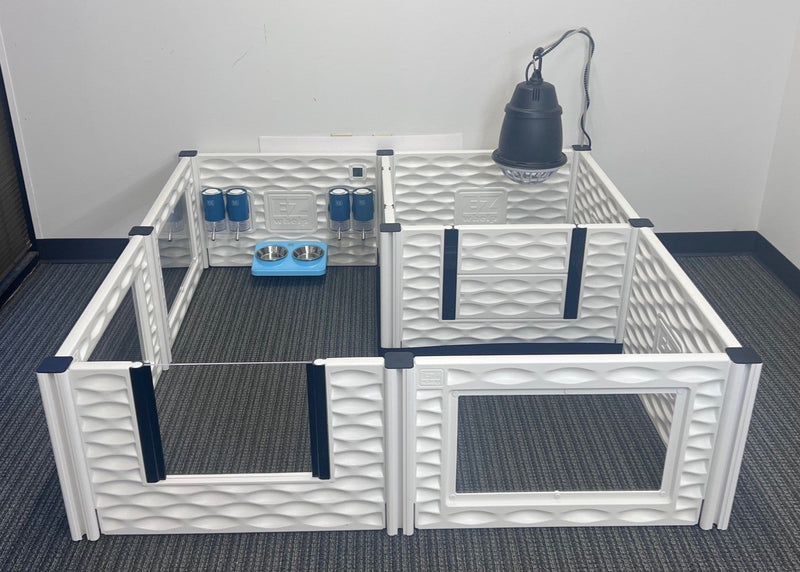

Watch stage one from the next room
EZwhelp Smart WiFi Camera & Temperature Monitoring System
$89.99
View product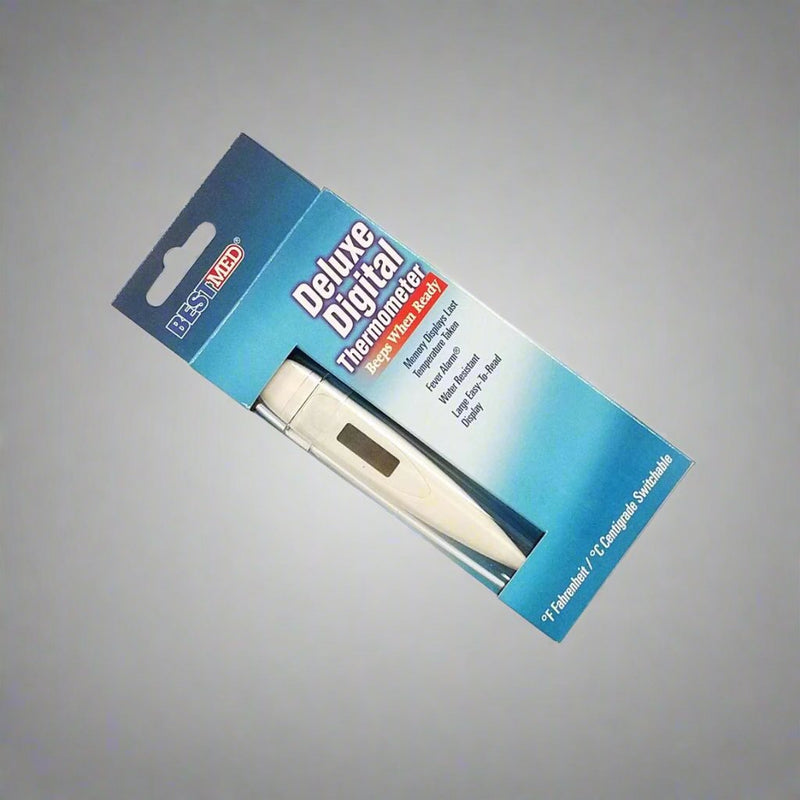
Not sure which size or bundle?
Five questions. We fill in what you've already told us.
Printable
Whelping record
Birth times, weights and colors as each puppy arrives, plus the post-partum follow-up.
Download the sheetFrequently asked
Up to two hours between puppies is normal. Some dams deliver steadily, others rest. Two hours pass since the last puppy and you know more are coming: call your vet.
Call your vet if she strains hard for 30 minutes and no puppy comes. Sources give 20 to 30 minutes; we use the more cautious 30, and 20 minutes for a brachycephalic dam, a toy breed, or a dam who has had a cesarean before.
Green discharge is normal if a puppy follows immediately — it means that puppy's placenta has separated. If no puppy follows, call. Green discharge before the first puppy is also a call.
Stage one runs 6 to 12 hours. She'll be restless, panting, nesting, maybe shivering, and nothing visible happens. Call your vet if stage one has run past 24 hours with nothing happening.
Never give oxytocin or calcium at home. Both are used by vets in specific circumstances and both are dangerous in the wrong ones — in an obstruction, oxytocin can rupture the uterus.
Count the placentas against the puppies. If one is missing, tell your vet. Have her and the litter checked within 24 hours, and write down anything unusual while it's fresh.