
Dog litter size calculator
How many puppies to be ready for, from the two things that actually change the answer.
Pick her size and age and the typical litter range appears here.
General educational information and estimates only—not veterinary advice or a diagnosis. No veterinarian-client-patient relationship is created. Confirm care with a licensed veterinarian; for urgent concerns, contact a veterinarian or emergency clinic now.
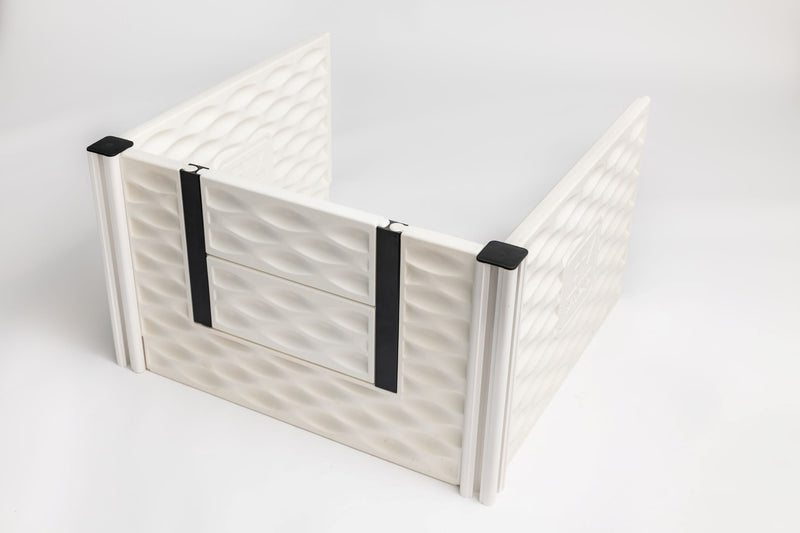
Room for the whole litter
Affiliate disclosure: Breeder Lab may earn a commission from EZwhelp purchases made through these links, at no extra cost to you.

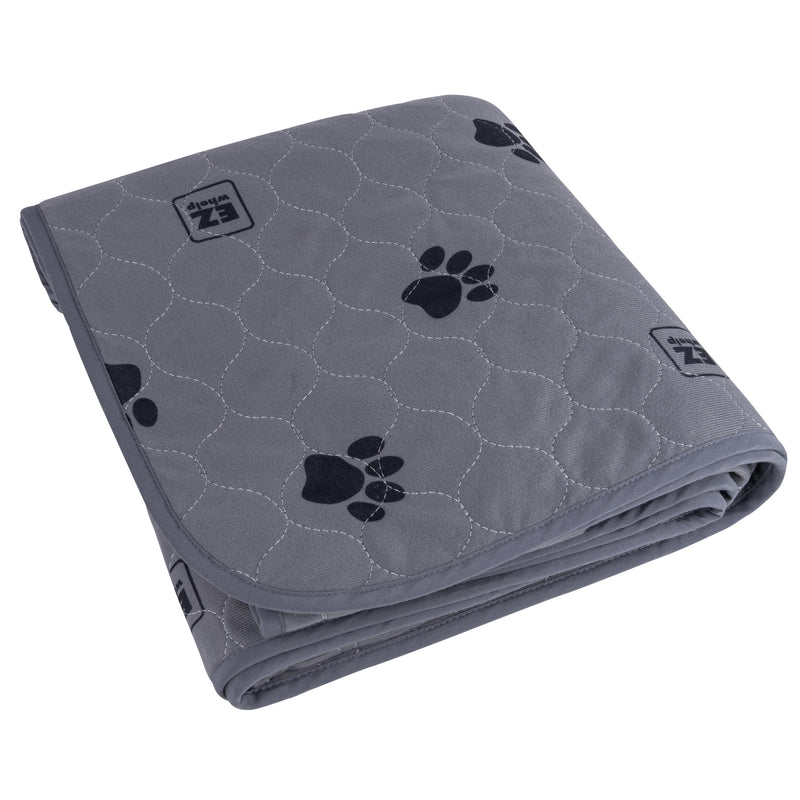
10 to 15 pads a day in whelping week
EZwhelp Reusable Quick Dry Pads - Heavy Absorbency
From $24.99
View productNot sure which size or bundle?
Five questions. We fill in what you've already told us.
Learn
Dog litter size calculator
How many puppies to be ready for — from the two things that actually change the answer.
How many puppies do dogs have?
Across 10,810 litters and 224 breeds the overall mean was 5.4 puppies. That is a population figure, not a forecast for one dam. The useful version of the question is which range to plan against, and the range here is the mean plus or minus one standard deviation — a published method that categorizes at least 70% of litters as typical.
Average litter size by breed size
| Size | Typical range | Most common |
|---|---|---|
| Toy or small — under 20 lb | 2 to 5 | 3 |
| Medium — 20 to 50 lb | 3 to 7 | 5 |
| Large — 50 to 90 lb | 5 to 10 | 7 or 8 |
| Giant — over 90 lb | 5 to 10 | 7 |
Mean litter size rises with breed size, from about 3.5 in miniature breeds to 7.1 in giant breeds.
Why we don’t ask how many litters she’s had
Most calculators ask, then apply a modifier based on the answer. The largest study on the subject — Borge et al. 2011, covering 10,810 litters across 224 breeds — found no effect of litter number on litter size. Two questions, because two is what the evidence supports.
What actually affects litter size
Breed size is the largest factor, followed by dam age. Breeding timing matters too: mating late relative to ovulation reduces the number that fertilize. Body condition at both extremes lowers the count. And inbreeding is the one causal factor a breeder can act on before the mating — each roughly 10% rise in genomic inbreeding is associated with about one fewer puppy per litter in Golden Retrievers. Run the pairing through the COI calculator before committing to it.
How to find out how many puppies she’s having
An ultrasound from around day 25 to 30 confirms pregnancy and heartbeats, but undercounts by one to two puppies. A radiograph from day 55, once the skeletons have mineralised, gives the count by skulls and spines. That is the number to plan supplies and the whelp against.
Frequently asked
Across 10,810 litters and 224 breeds the overall mean was 5.4 puppies, rising with breed size from about 3.5 in miniature breeds to 7.1 in giant breeds. A typical range for a toy or small breed is 2 to 5, medium 3 to 7, and large or giant 5 to 10.
No. The largest study on the subject, 10,810 litters across 224 breeds, found no effect of litter number on litter size, so this calculator does not ask for it.
There is an age effect and it interacts with breed size, with a larger decline in bigger breeds, but no magnitude is published that can honestly be applied. Age changes which end of the range to plan for, not the range itself.
An ultrasound from around day 25 to 30 confirms pregnancy but undercounts by one to two puppies. A radiograph from day 55, once the skeletons have mineralised, gives the count.
Not reliably. The measured means are about 7.6 for a Labrador and 7.1 for giant breeds, so the typical range is the same 5 to 10 for both.